
-
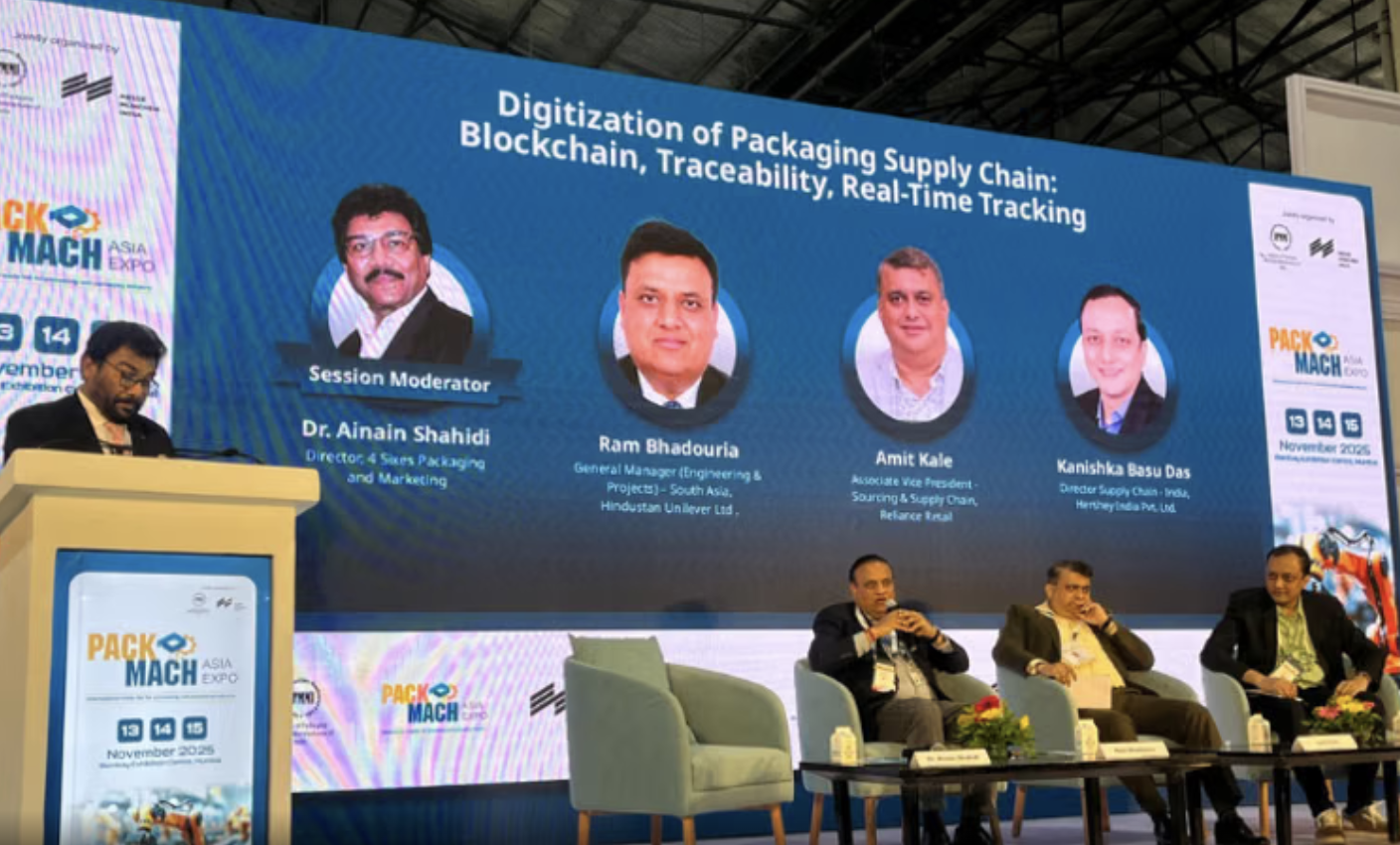
At PackMach Asia Expo 2025, a panel with leaders from Unilever, Reliance Retail and Hershey India turned the spotlight on one of the most complex, often invisible parts of the FMCG value chain: packaging supply chains.
Unilever’s traceability play
Ram Bhadouria from Unilever explained how the company is pushing for 100% digital traceability across nearly 2,500 SKUs and 30 power plants. Using barcodes and QR codes, Unilever can trace a consumer complaint (say, a foreign object in a pack or taste issue) back to the exact factory, shift and even batch of raw material used.Even for complex commodities like tea – sourced from multiple gardens – Unilever is working with tech partners to track movement from garden → blending → finished pack. Cost, he emphasized, is secondary to traceability, which is increasingly becoming a regulatory and consumer expectation.
On sustainability, Bhadouria highlighted the challenge of managing nearly 1,25,000 tonnes of plastic a year and Unilever’s commitment to being plastic-neutral – recycling as much plastic as it produces. The levers:
-
Increasing post-consumer recycled (PCR) plastic in HDPE bottles
-
Experimenting with biodegradable films to replace conventional BOPP
-
Exploring paper-based formats for sachets despite higher costs
He also pointed to green financing and shared access to solar power as tools to pull suppliers into this sustainability journey.
Reliance Retail & Hershey India: real-time, anti-counterfeiting and circularity
Amit Kale from Reliance Retail spoke about using RFID and real-time transport data to cut truck turnaround times and reduce logistics waste. He floated the idea of “packaging SIM cards” – QR codes that activate in-aisle and carry rich digital information, potentially reducing the need for heavy multi-colour printing and enabling leaner, more sustainable packs.
Kanishka Basu Das from Hershey India connected digitisation to agility and anti-counterfeiting. By tying packaging IDs into back-end systems, Hershey can respond faster to consumer trends, accelerate launches, and build tamper-evident, traceable packs that make counterfeiting harder. He also linked traceability to circular economy goals – knowing where a pack originated, where it was sold, and how it is collected back into recycling streams.
-